
Explore free-movement behavioral patterns
Discover patterns from posture and temporal features, then interpret clusters using behavioral sequences and source video.
Behavior-pattern discovery in freely moving mice
Train or reuse self-supervised representation models from experimental video, discover behavioral units through unsupervised clustering, and analyze pattern distributions, transitions and experimental-group differences.
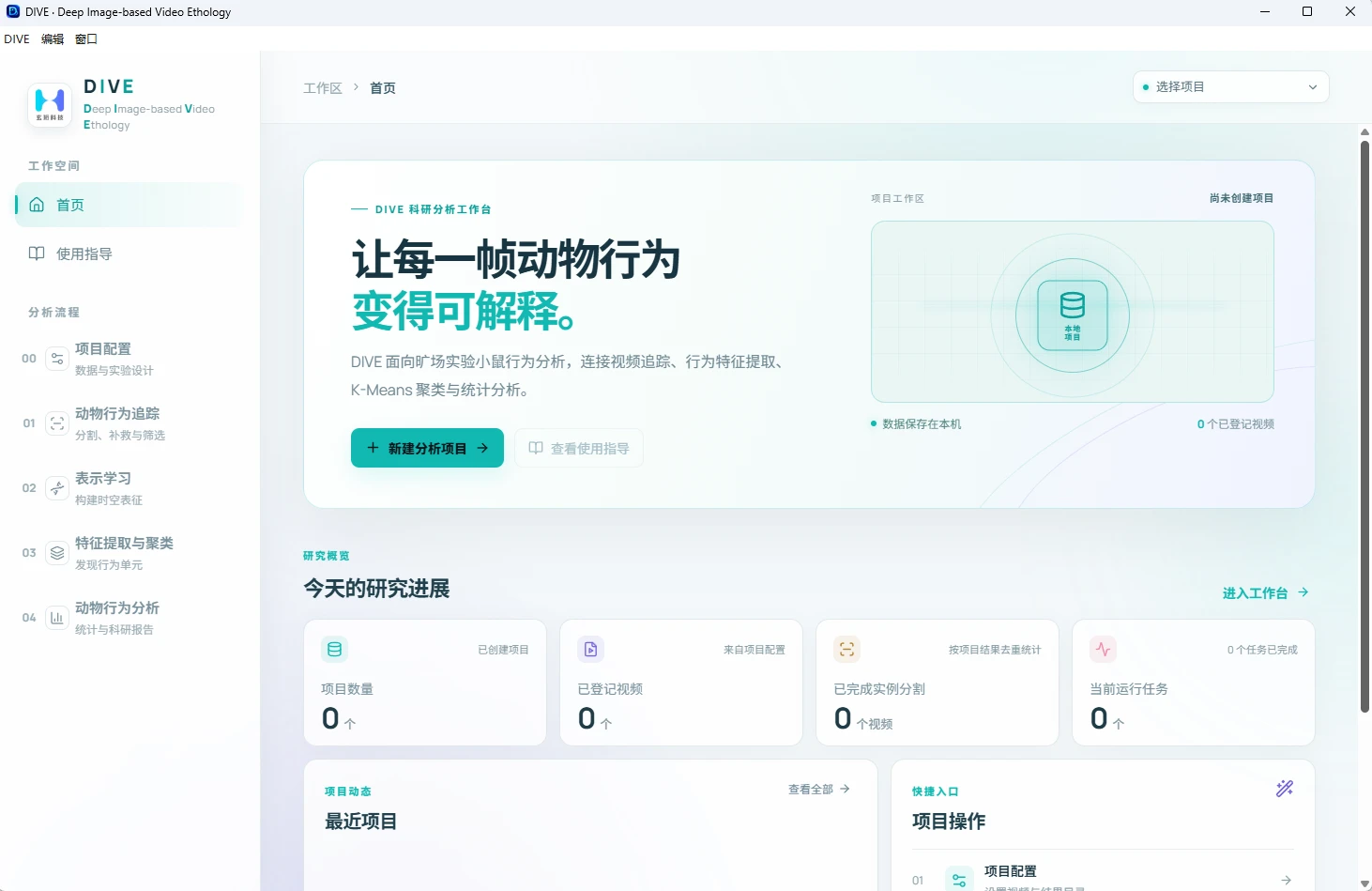 Enlarge image
RESEARCH APPLICATIONS
Discover patterns from posture and temporal features, then interpret clusters using behavioral sequences and source video.
Describe phenotypes using pattern duration, event counts and transitions to formulate further research hypotheses.
Compare pattern distributions and transitions between groups and examine statistical tables. Differences alone do not establish causality.
MODEL TRAINING AND REUSE
Reuse an existing model or train on your own posture data. The learned representation supports feature extraction and unsupervised clustering.
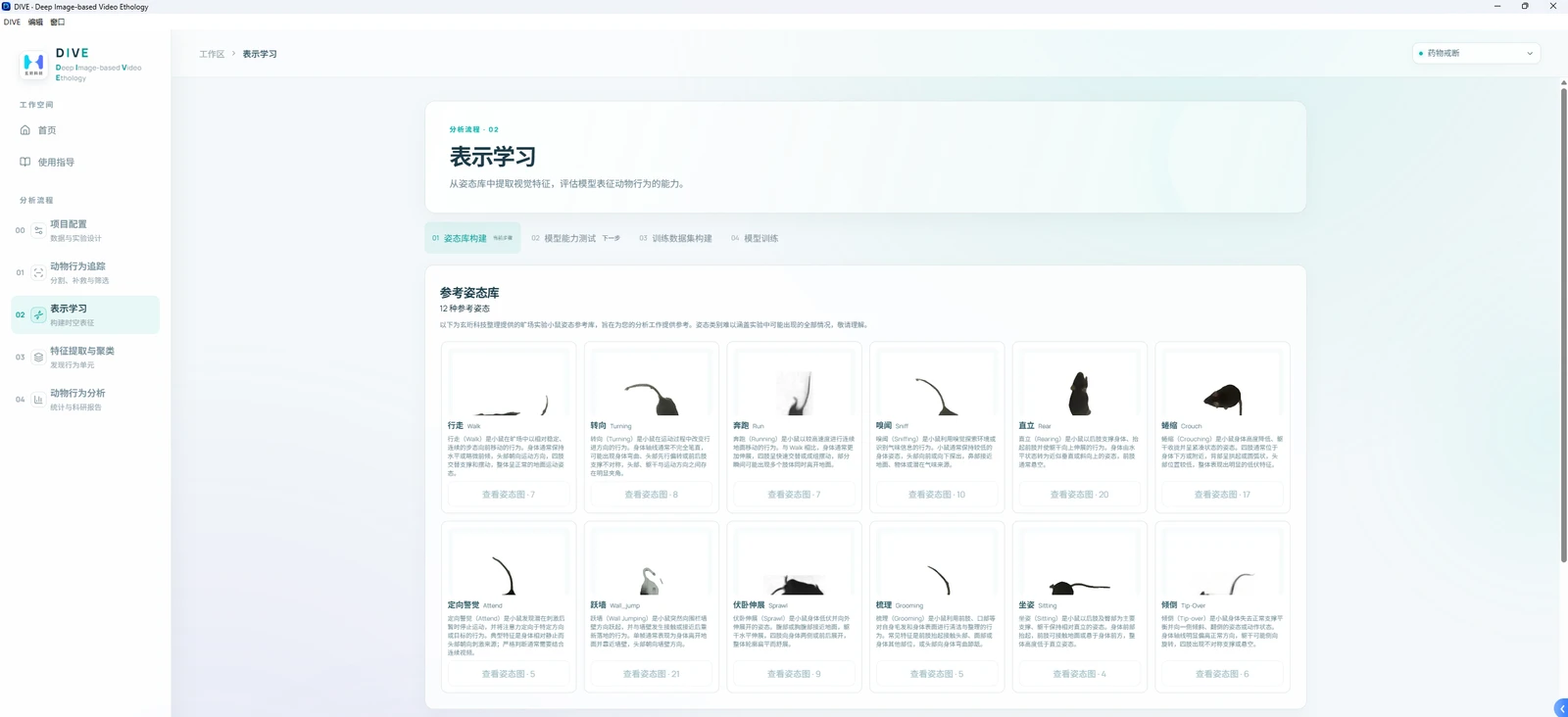
Organize posture reference images and assess how well default or custom models distinguish the current data.
Generate globally augmented and locally masked training data from posture images.
Monitor progress, loss and validation curves, with pause, continuation and checkpoint resumption.
Save the best model and training records for reuse in feature extraction, temporal fusion and pattern analysis.
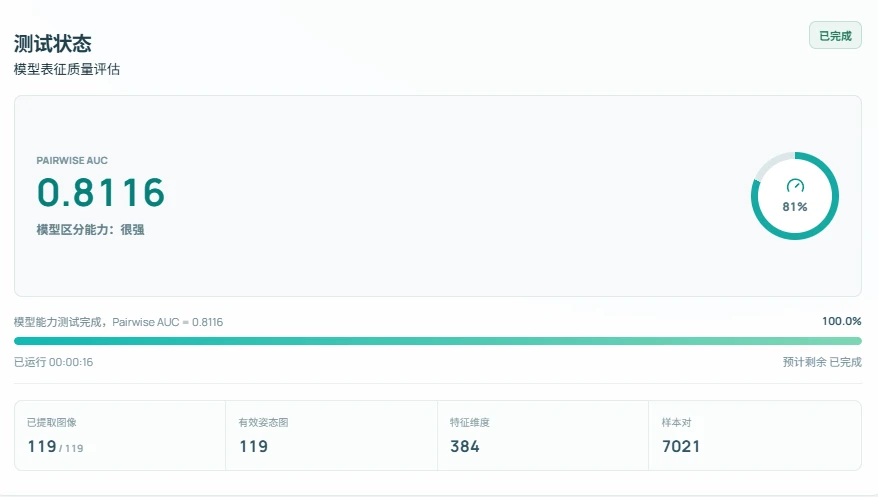 Enlarge image
CORE CAPABILITIES
Link single-mouse videos to groups, configure sampling and outputs, and retain video-level and group-level relationships.
Inspect missing detections after instance segmentation, select targets and crop posture images to reduce background interference.
Build augmented data, configure and monitor training, save the best model and parameter-group records, and resume from checkpoints.
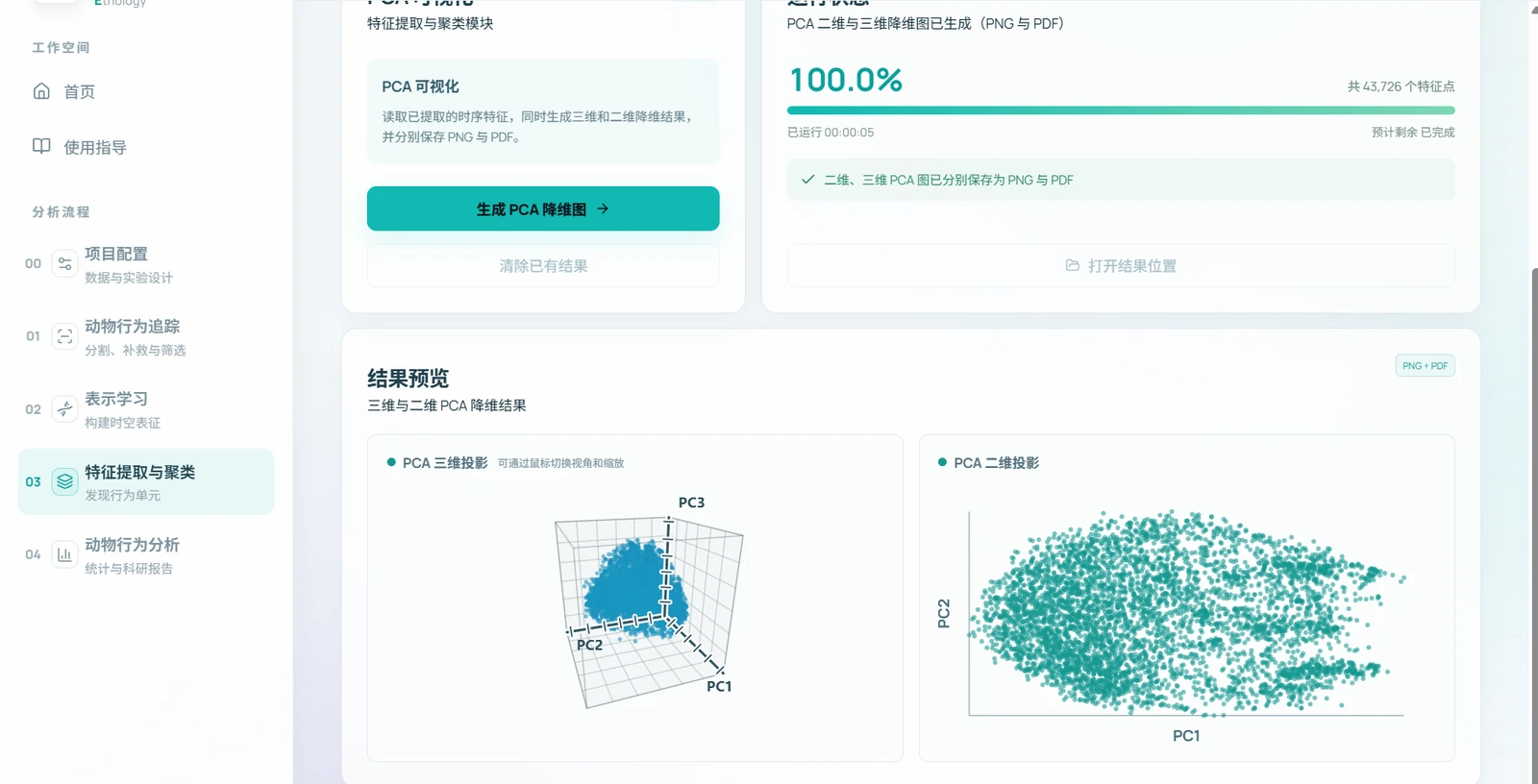
Fuse temporal features and use visualization and silhouette scores to support cluster-count selection, then inspect labels and behavioral sequences.
Inspect pattern duration, event counts and transitions at video and experimental-group levels.
Perform between-group statistics and export data tables, PNG and PDF while retaining pattern definitions and analysis conditions.
Actual interfaces from the DIVE user manual; original screenshots retain their Chinese labels.
 Enlarge image
 Enlarge image
RESEARCH OUTPUTS
Figures from the DIVE user manual. Interpret pattern meanings alongside the original video.
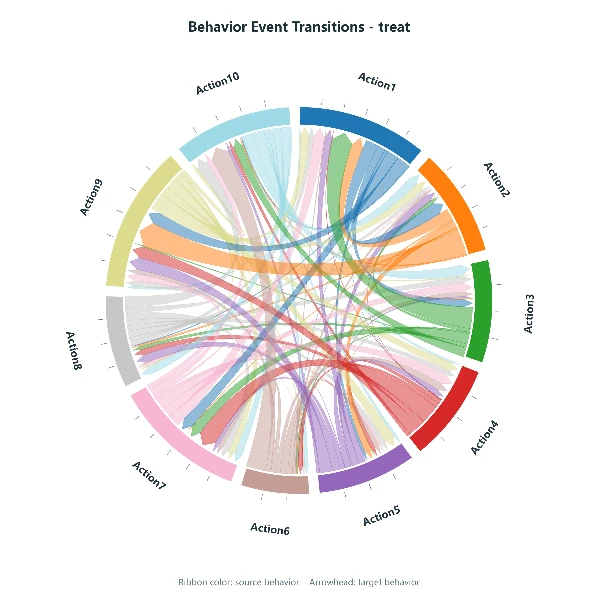 Enlarge image
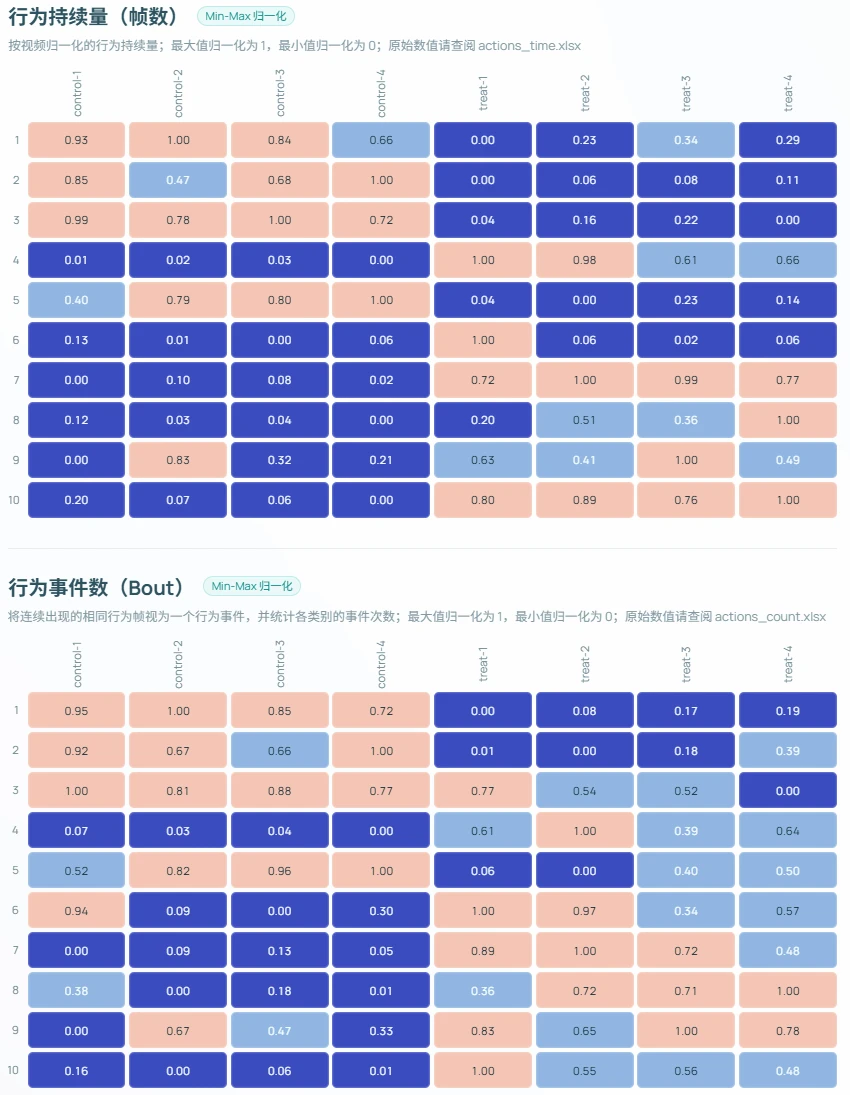 Enlarge image
ANALYSIS WORKFLOW
Organize single-mouse videos by experimental condition and check sampling settings and output locations.
Check missing detections and target extent, ensuring posture images represent the research subject.
Evaluate suitability, perform self-supervised training or resume it as needed, and use the model to extract and fuse temporal features.
Inspect clustering through visualization, silhouette scores and behavioral sequences, and interpret the meaning of each pattern.
Review distributions, transitions and group differences, then export statistical data and result figures.
DELIVERABLES
BEFORE ANALYSIS
FREQUENTLY ASKED QUESTIONS
DIVE explores patterns without predefined labels rather than directly producing named behavior categories. Researchers interpret cluster categories before analyzing their distributions and transitions.
Yes. Build a posture library and augmented data, choose initial weights, and use self-supervised training with pause and checkpoint resumption. This trains a representation model, not a classifier for predefined behavior names.
Interpret clusters using feature visualizations, silhouette scores, behavioral sequences and video, then inspect distributions, transitions and statistical tables. Categories and differences alone do not establish a behavioral diagnosis or causality.
Tell us your experiment, recording angle, and target measurements to arrange a DIVE demo and sample assessment.